That day I woke up and had breakfast with Dragan's family, a friend of mine who has been working in a well-known IT company in Vienna for five years. I was particularly impressed by the organization of public transport: everything is clean, clearly marked and without unnecessary crowds.
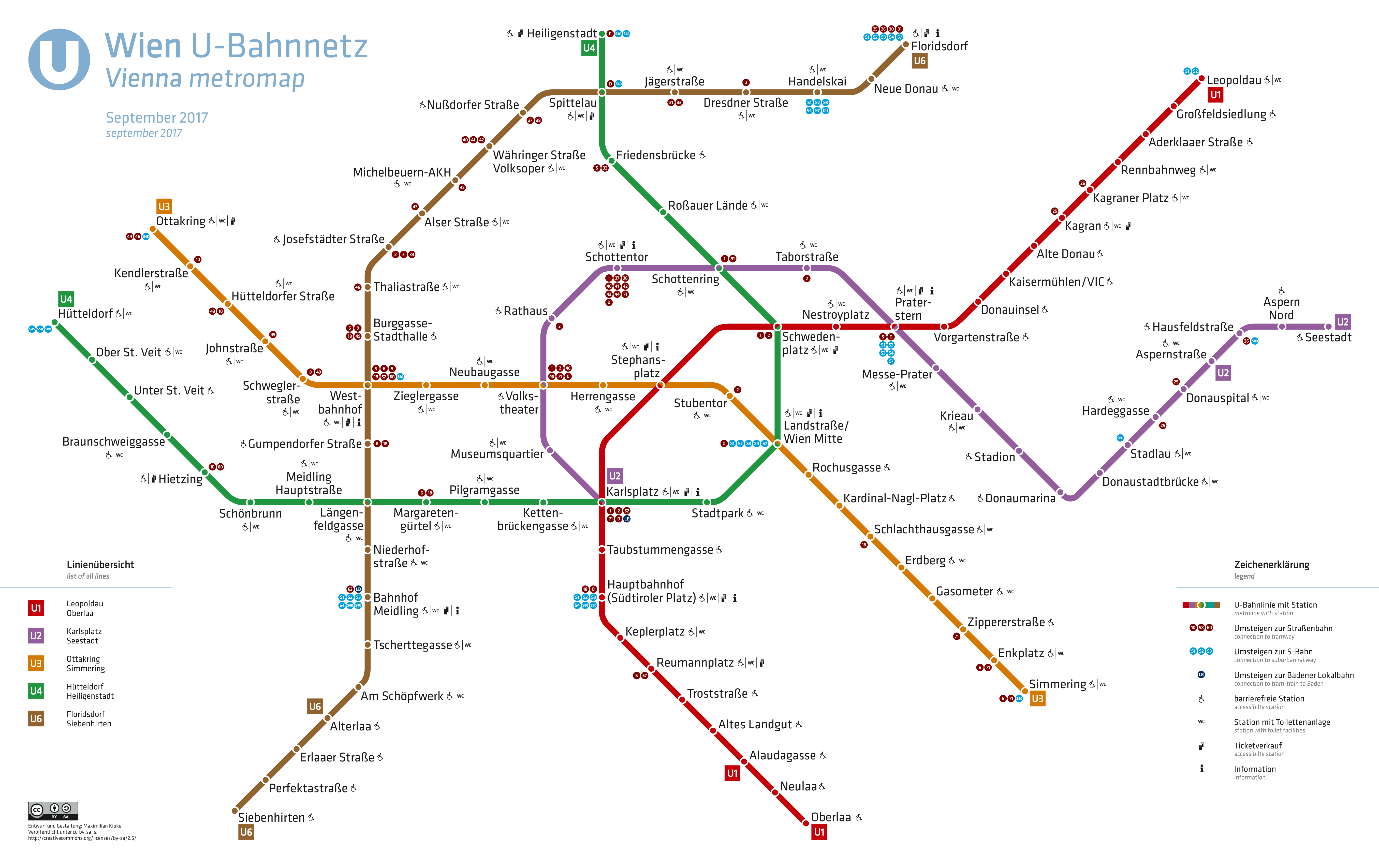
Source: https://commons.wikimedia.org/wiki/File:U-Bahnnetz_Wien_2017.png

Vienna Metro, known as Wiener U-Bahn, represents the core of public transport in the Austrian capital. With its efficiency, punctuality and accessibility, the metro allows the residents and visitors of Vienna to easily move around the city. In this guide, we provide a detailed overview of the Vienna Metro system, including history, lines, ticket prices and useful tips for travelers.
Photo: Aleksandar Mitić
History of the Vienna Metro
The idea of an underground railway in Vienna dates back to the 19th century. The first concrete plans appeared in 1844, when engineer Heinrich Sichrowsky proposed the construction of an atmospheric railway. However, it was not until 1968 that the construction of the modern metro system began. The first line, U1, opened on February 25 (my birthday ;)=) 1978, connecting Reumannplatz and Karlsplatz stations. Since then, the network has been continuously expanded and modernized, becoming a key part of Vienna's public transport.
Lines and Network
The Vienna Metro consists of five main lines, marked with numbers and colors:
- U1 (Red Line): Connects Oberlaa in the south with Leopoldau in the north, passing through the city center. The length of the line is 19.2 km with 24 stations.
- U2 (Purple Line): It runs from Karlsplatz to Seestadt, including 17.2 km and 20 stations. This line passes through key points in the city center.
- U3 (Orange Line): Connects Ottakring in the west with Simmering in the east, with of 13.5 km and 21 stations.
- U4 (Green Line): Connects Hütteldorf in the west with Heiligenstadt in the north, passing along the Vienna River and the Danube Canal. The length of the line is 16.5 km with 20 stations.
- U6 (Brown Line): The longest line, extending from Siebenhirten in the south to Floridsdorf in the north, with a length of 17.4 km and 24 stations. It is interesting that the central part of this line is above ground.
The metro line map is available on the official website Wiener Linien.
Working Hours and Frequency
Metro in Vienna operates daily from 5:00 to 1:00 a.m. Trains run at intervals of 2 to 5 minutes during the day, while evening intervals are slightly longer, up to 8 minutes. During weekends and holidays, the metro operates around the clock, providing 24-hour service at 15-minute intervals.
Updated Ticket Prices
Vienna public transport uses a unique ticket system that applies to the metro, trams and buses. Tickets can be bought from machines in stations, newsagents, through mobile applications or directly in vehicles (at a slightly higher price). All tickets must be validated before the start of the journey.
Ticket prices (from February 2025):
- Single ticket: €2.40
- 24-hour ticket: 8.00 €
- 48-hour ticket: €14.10
- 72-hour ticket: €17.10
- 7-day ticket: €22.60 (portable version) / €19.70 (digital, personalized version)
- Monthly ticket: €51.00 (personalized) / €58.70 (portable)
Children under 6 years old have free transport, while children under 15 years old do not pay a ticket on weekends and holidays. The fine for driving without a valid ticket is €105, and controls are frequent.
Safety Measures and Tips
The Vienna Metro is known for its cleanliness and safety. However, it is important to follow the following tips to make your trip as pleasant as possible:
- Ticket Validation: Be sure to validate your ticket before entering the transport. Blue validation machines are located at the entrances to metro stations and inside tram and bus vehicles.
- Ticket controls: Controls are frequent and the fine for not having a valid ticket is €105.
- Security: Although the metro is generally safe, always take care of your personal belongings and be aware of your surroundings.
- Rules of conduct: Respect the transport rules, including the ban on smoking and eating in vehicles.
Useful Mobile Apps for Travelers
For easier navigation in Vienna's public transport, we recommend the following mobile apps:
- WienMobil: The official application of the “Wiener Linien” that allows route planning, purchase and display of tickets, as well as information on various means of transport. It is available for free for Android and iOS devices. play.google.com
- Qando Wien: An application that provides information on timetables, route planning and vehicle arrival times in real time. It also provides access to services such as Citybike and Car2go. It is available for Android and iOS devices.
- Vienna Metro Map 2024: A simple application that offers offline maps of the Vienna metro, buses and railways, ideal for tourists and residents. It is available for Android devices. Download the application here
Frequently Asked Questions (FAQ)
1. Are pets allowed on the Vienna underground?
Yes, pets are allowed on Vienna's public transport. Dogs must wear a muzzle and be on a leash. Small pets can be transported in suitable transporters.
2. Can I transport a bicycle in the subway?
Yes, transportation of bicycles is allowed in the subway, but only in certain carriages and outside peak hours. It is necessary to have a valid bicycle ticket.
3. Is there free Wi-Fi in the subway?
Yes, free Wi-Fi is available for passengers in many Vienna subway stations.
4. How can I get information about traffic delays or disruptions?
Information about current delays or disruptions is available via the WienMobil app or on the official website of “Wiener Linien”.
5. Are metro stations accessible for disabled people?
Most metro stations in Vienna are equipped with lifts and ramps for disabled people.
6. Where can I buy public transport tickets?
Tickets can be bought from machines at stations, newsagents, via mobile apps like WienMobil, or directly in the vehicles (at a slightly higher price).
For more information and the latest updates, visit the official website Wiener Linien.